Intro to F1 in 2 Laps
A speed-run through Formula 1 — history, schedule, teams, points, tires, and the race-weekend format — paced to fit in the time it takes Valtteri Bottas to complete two laps at Bahrain.
01Welcome
Today I'm going to give you an intro to Formula 1 racing. If you saw the Cadillac F1 commercial in the Super Bowl and wanted to learn what the excitement is about — or really if you're just interested in following F1 — this video is for you.
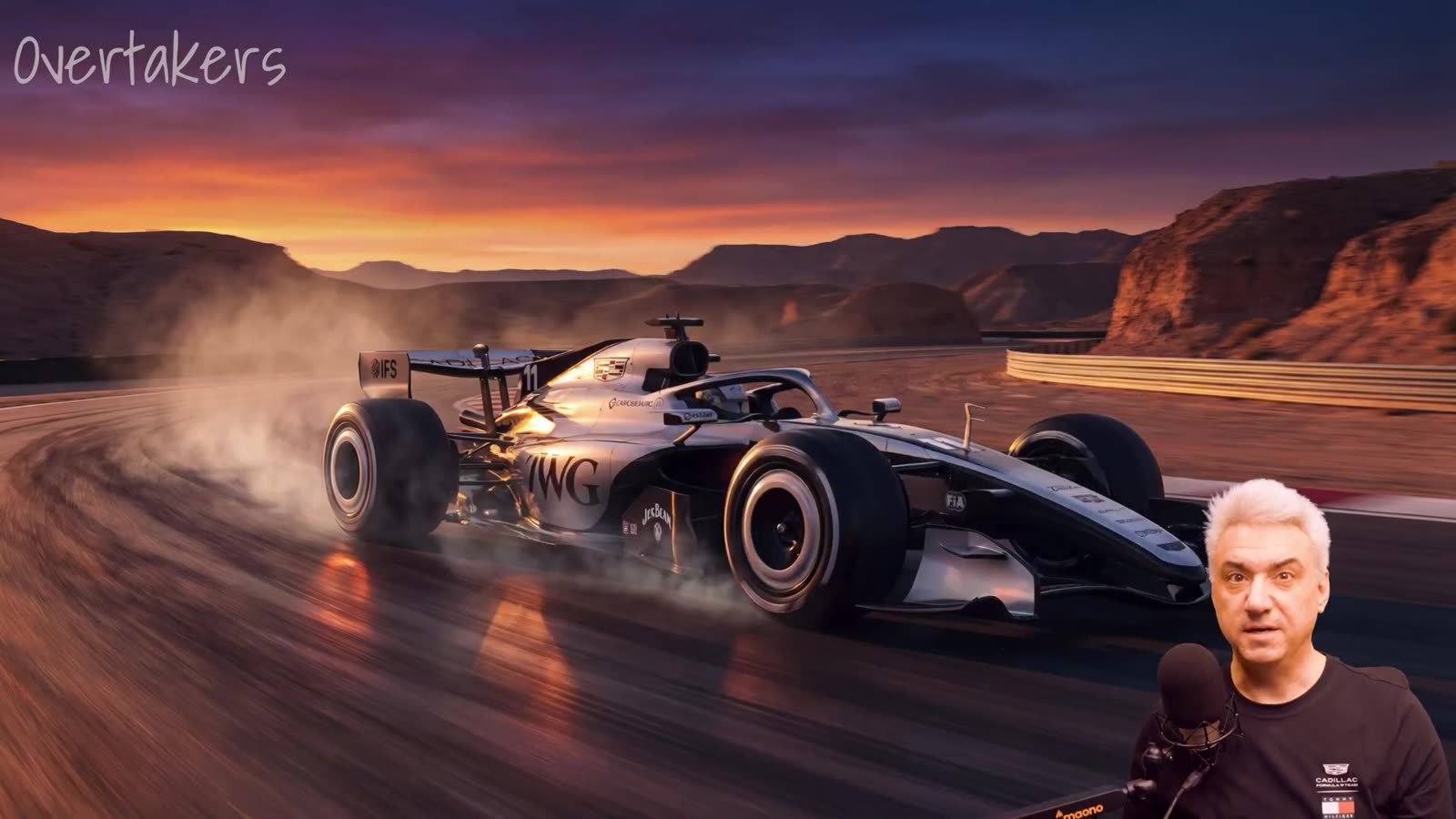
If you measure in money, F1 is the pinnacle of motorsport — the most technologically advanced cars, the biggest budgets, the highest-paid drivers, and the fastest pit stops. Formula 1 is definitely about going fast, so I'm going to hold myself to the same standard.
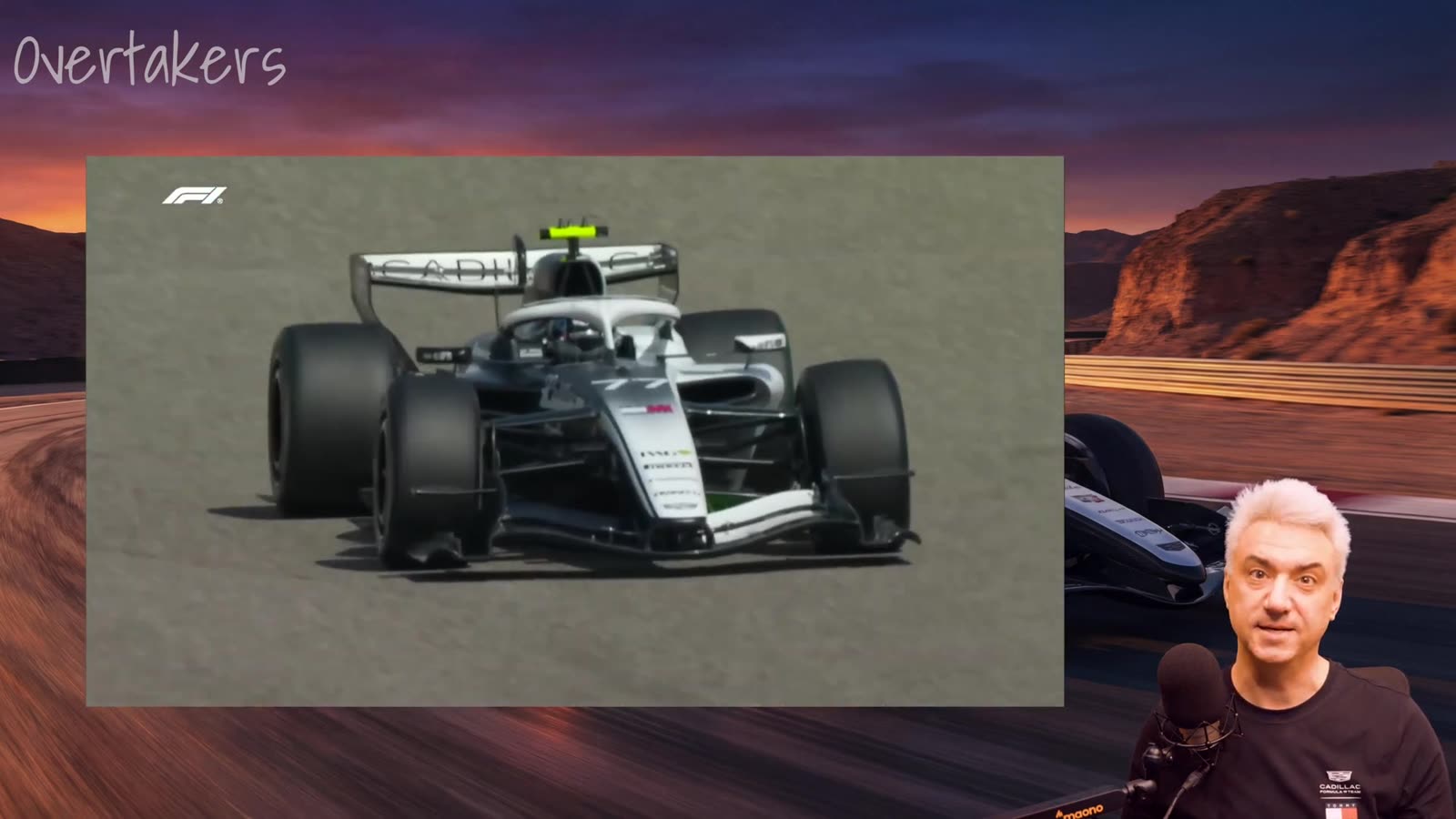
Team Cadillac had an enormously impressive showing at preseason testing in Bahrain, with the fastest lap going to Valtteri Bottas at 1 minute 36 seconds. So I'm going to give you my intro to F1 in the time it took Valtteri to do 2 laps at Bahrain. (Fear face.)
Let's go.
02Where F1 Came From
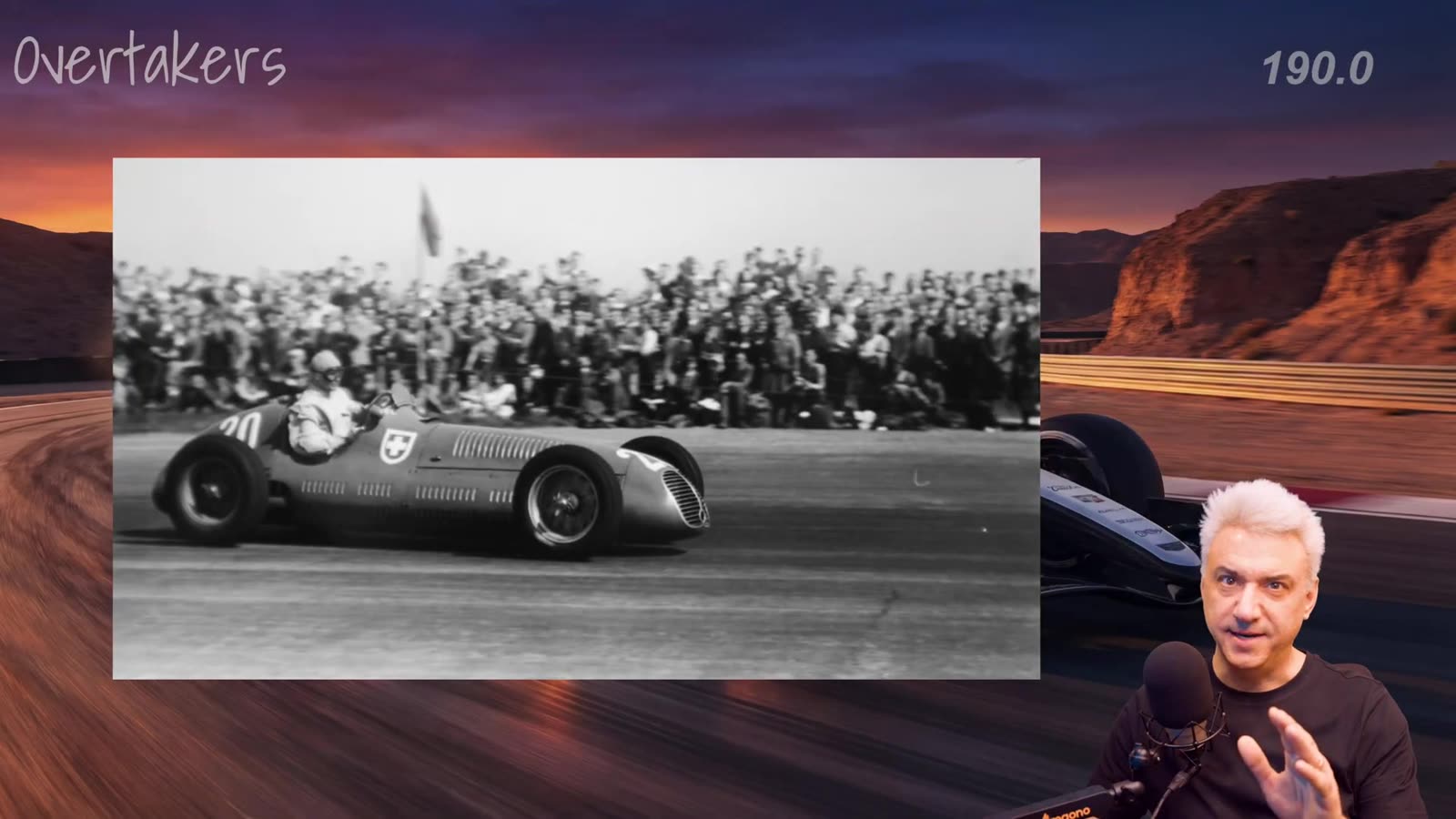
Formula 1 was created in 1946, when the Fédération Internationale de l'Automobile — the FIA — published the rules for its first championship, which happened in 1950 at the famous and revered Silverstone circuit in England.
03The 2026 Season
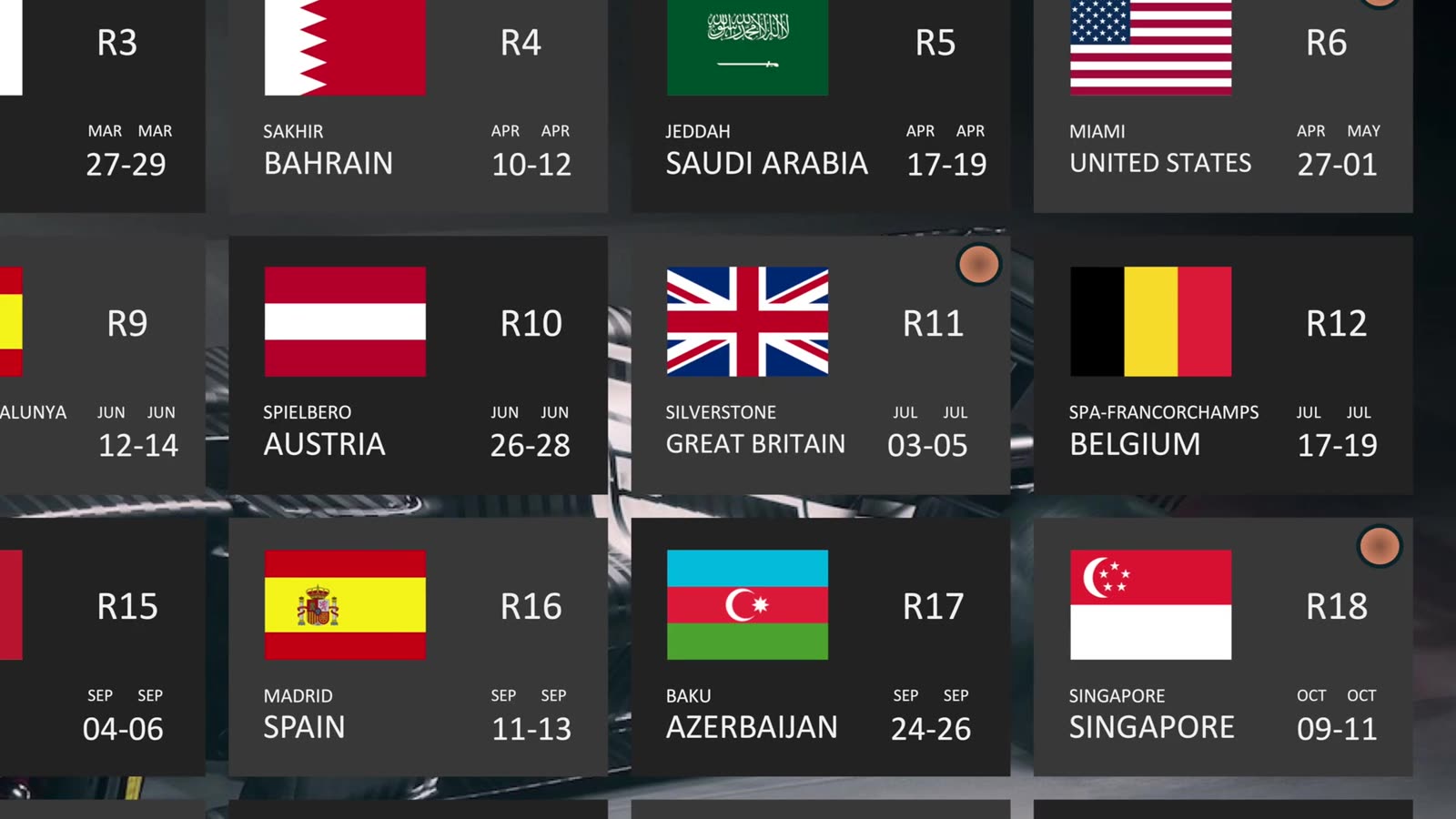
The schedule for the 2026 season includes 24 Grand Prix races and 6 Sprints at 24 global locations. These races span 21 countries across 5 continents, making Formula 1 a truly global motorsport.
Distance and duration
Races are a minimum of 305 km (190 miles), typically last around 2 hours, and in dry conditions require at least 1 pit stop. Sprints are 100 km (62 miles), last about 30 minutes, and don't have a pit stop — hence the name.
The teams competing in 2026
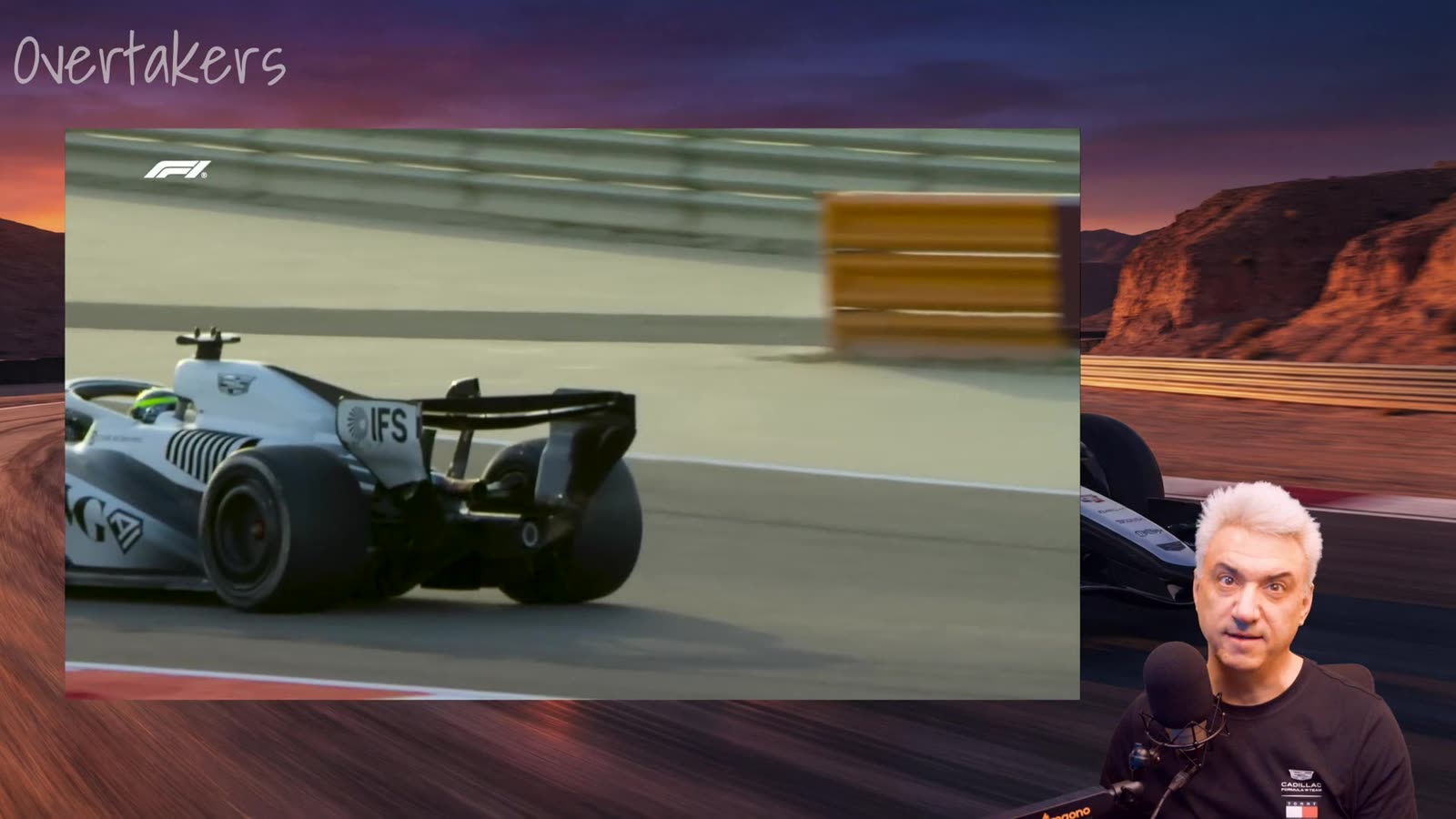
It's an exciting year with newcomers Audi and — my favorite — the brand-new Cadillac F1 Team. McLaren, Mercedes, Red Bull, and Ferrari are the favorites to be fighting for the championships.
04Points, Money & The Two Championships
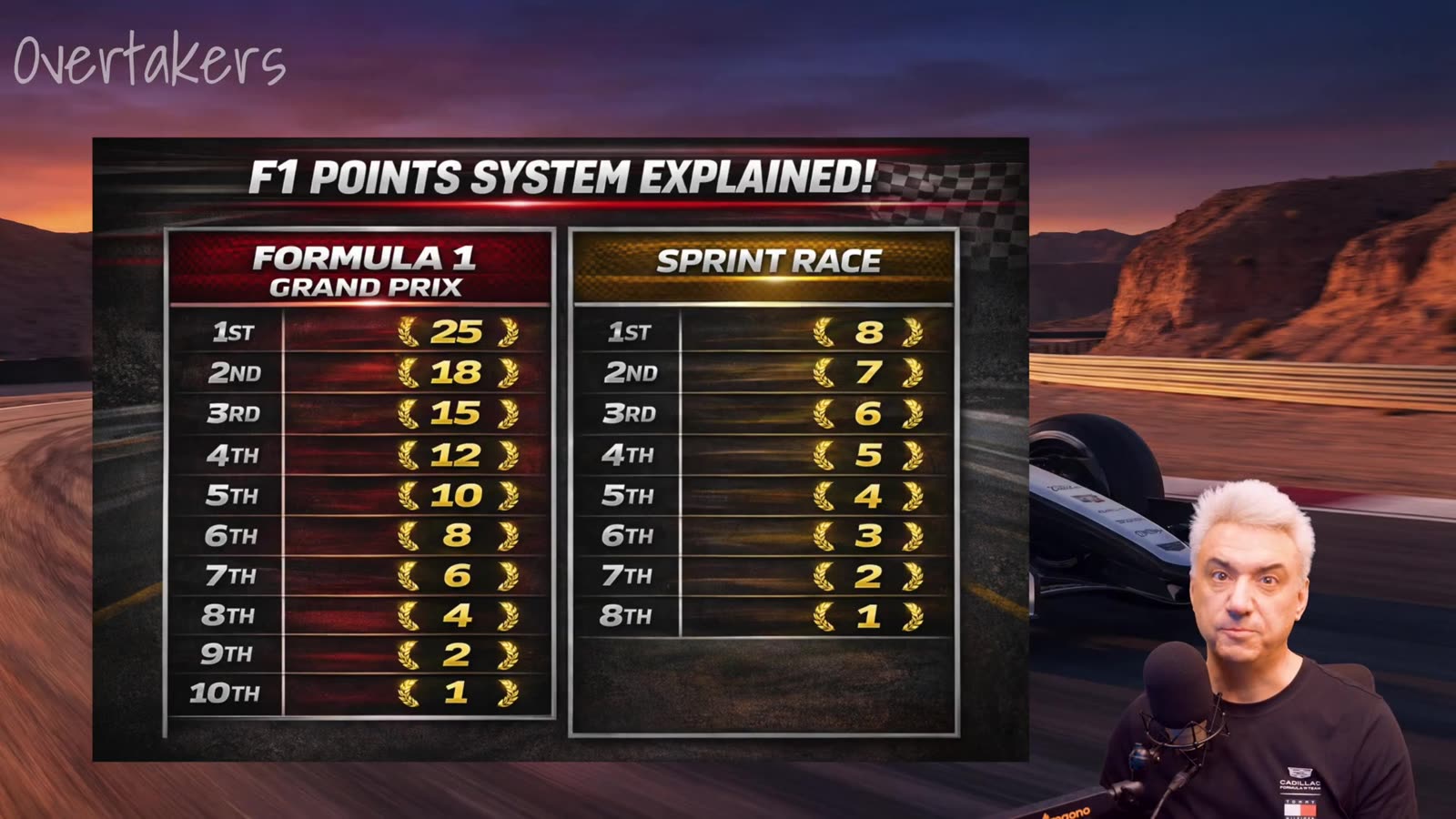
Fighting for the prize in F1 means scoring points. To score points you have to finish in the top 10 for full races, or the top 8 for a Sprint.
Drivers vs. Constructors
The driver with the most points at the end of the season wins the Drivers' Championship. FIA doesn't award any money directly to the drivers for this — though most drivers have incentives in their team contracts tied to where they place.
Where FIA does award money is the Constructors' Championship. The team with the most points from both drivers combined wins the Constructors' title — and the prize money that goes with it.
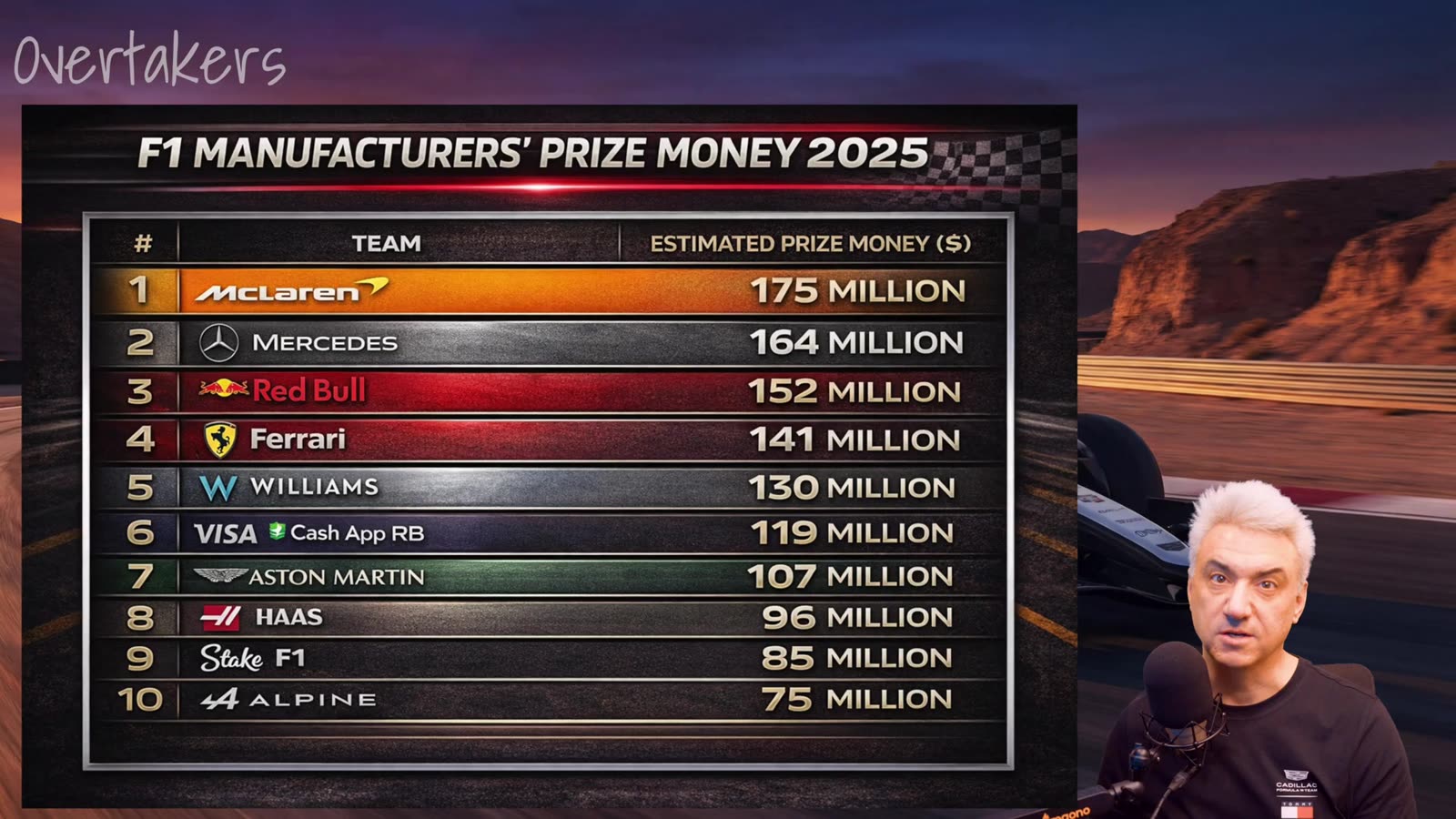
The difference between 1st and last place is roughly $100 million USD.
05Tires
Tires are a big deal in Formula 1, and you'll hear a lot about them. Proper handling and selection of tires is the main strategic element of a race.
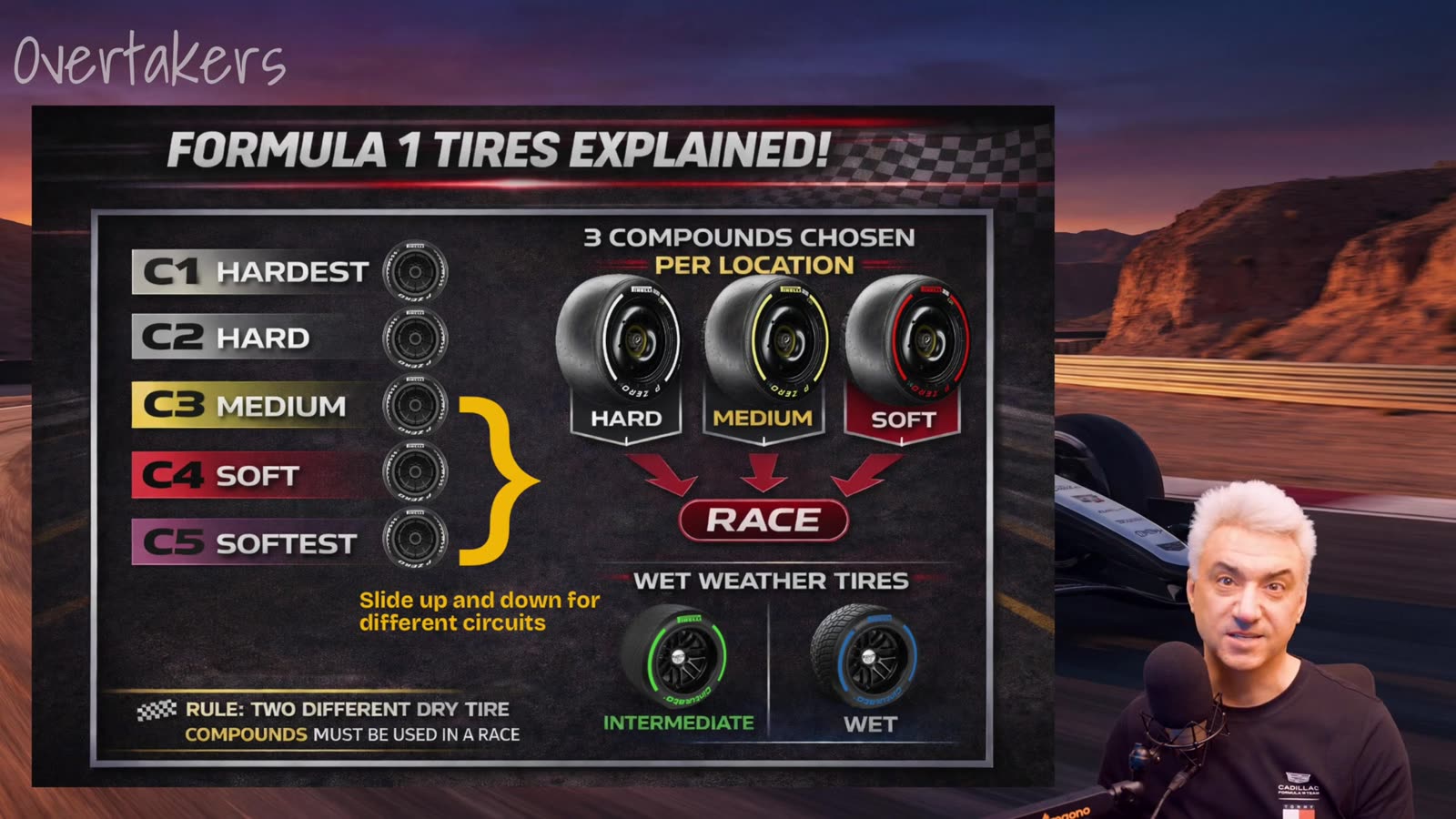
In 2026 there are 5 dry compounds — C1 through C5 — from hardest to softest. Each race location chooses 3 consecutive compounds, which then get labeled soft, medium, and hard for that weekend. Each compound has a unique color band on the sidewall for easy identification.
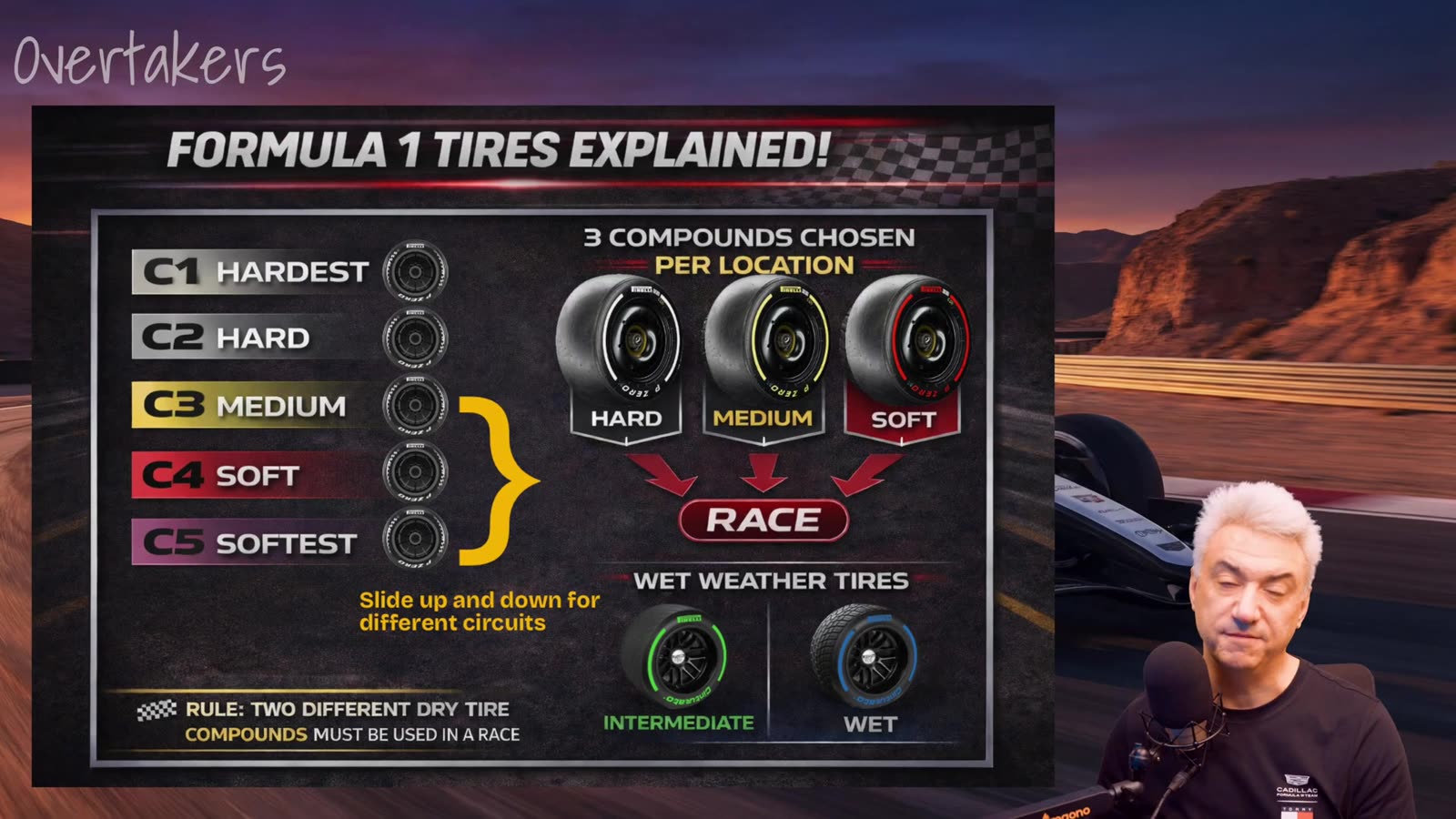
Teams will race in the rain too, which brings in the intermediate or wet tires — specially designed to pump water out from under the contact patch.
The 2-second pit stop
To change the tires, the team performs a pit stop — the car comes into pit lane and ideally stops for 2 seconds to swap rubber and get back to racing.
06The Race Weekend
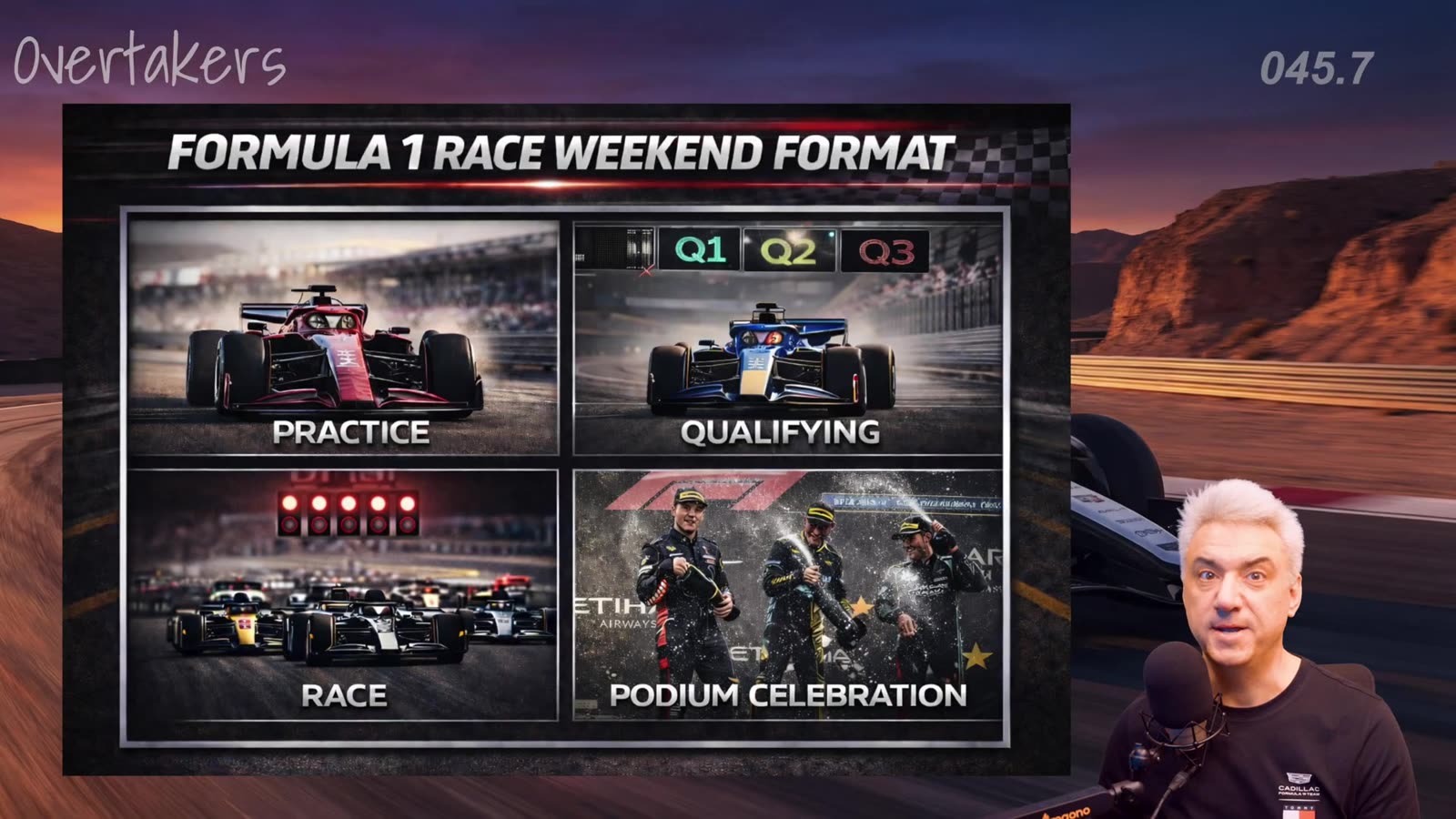
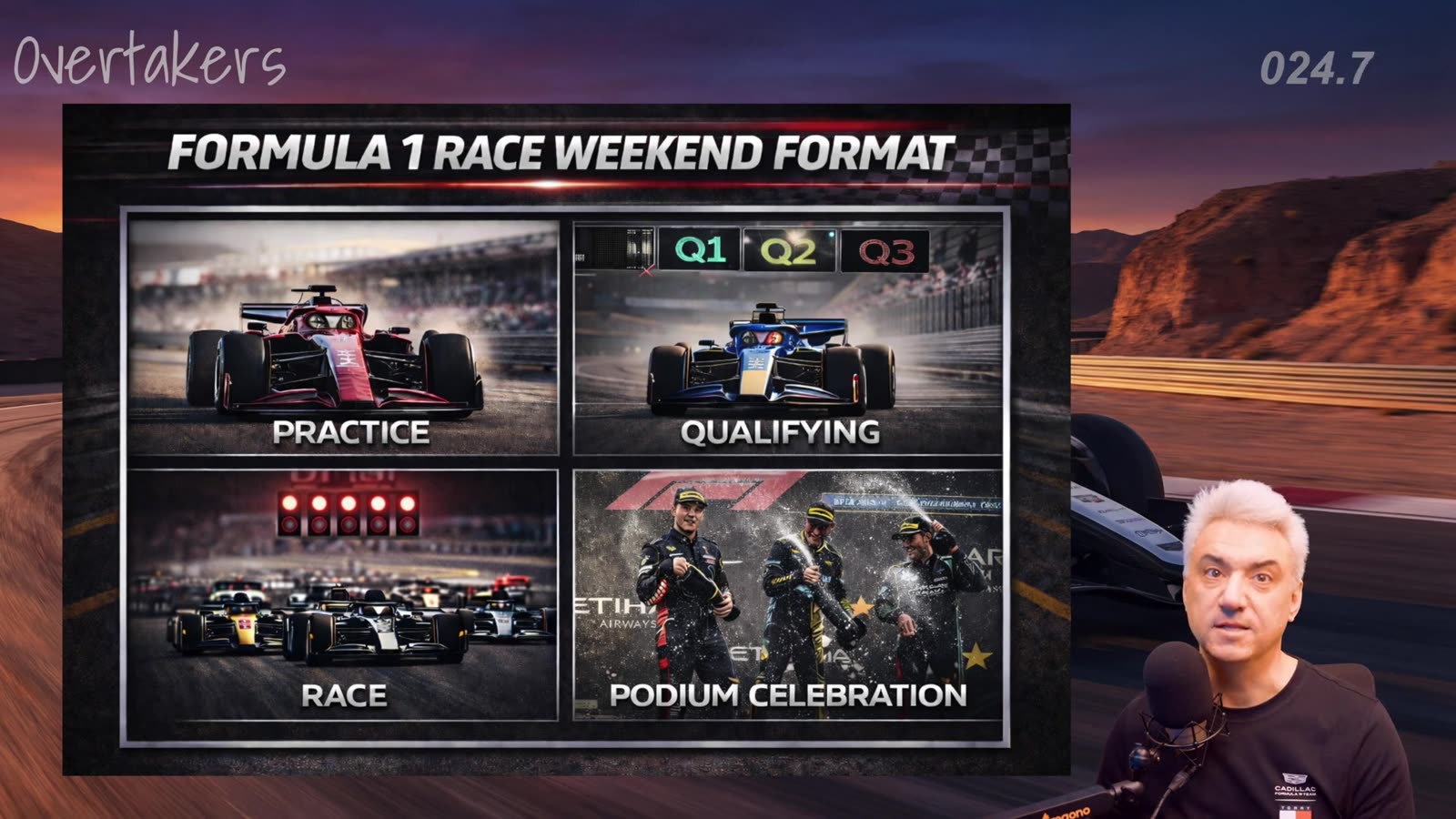
For a given race week, the format is as follows. The week starts with practice sessions — the team and drivers collect data and get familiar with the track.
Saturday: qualifying
The competition begins with Saturday qualifying, which determines the grid — the order drivers line up for the start of the race. Qualifying happens in three segments — Q1, Q2, Q3. After each segment the slowest drivers by lap time are eliminated: 6 are eliminated after Q1, 6 more after Q2, and whoever is fastest in Q3 wins the lead spot — pole position.
Sunday: race day
Sunday is race day. The top three finishers are recognized with a podium celebration that involves spraying each other with very large bottles of champagne.
07Just In Time
Phew — that was close.