Sponsorship Hype, OpenF1 Analysis & The Cadillac Dancing Cat
The series opener — a quick tour of the Cadillac F1 sponsor lineup, an engineering deep-dive into one of the boldest pit-strategy calls of the 2024 season, and a closing dance number you didn't ask for but absolutely earned.

01Welcome
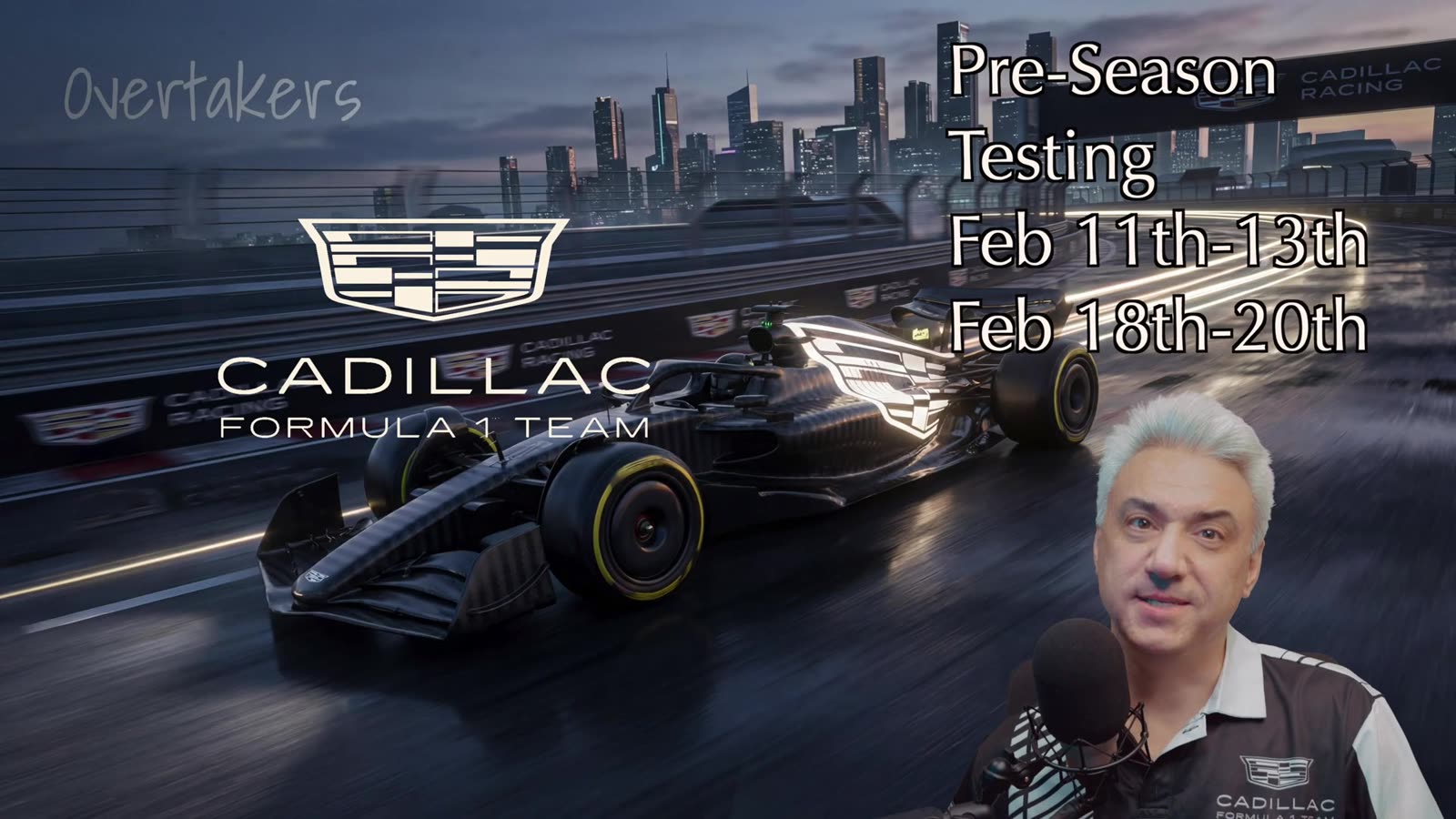
It's 2026, and I'm super excited because this is the year that Cadillac Racing hits the Formula 1 grid. Welcome to Overtakers — I'm Sean Gleason, a big Team Cadillac F1 fan who works at GM, but not in racing. I'm in Product Design Engineering, and I'm a big supporter of #IWorkForGM.
I got into Formula 1 a few years ago thanks to some university friends, and now I can't believe the company I work for had the fortitude to take a huge risk and compete for points in hyper-competitive Formula 1 racing. (Respect.)
2026 is a super intriguing year for F1 because it introduces brand-new technical regulations — and therefore brand-new cars — and with the addition of Cadillac, a brand-new team, bringing the number of F1 racers to 22 for the first time since 2016. (That's a lot.)
What you get on this channel
- Cadillac F1 Hype Videos — fast edits, big energy, maximum vibes. Example coming right up.
- Formula 1 in Plain English — the jargon, the rules, the "wait… why did he pit?" moments. I've learned a lot since I started watching, and I want to share the wealth with Cadillac fans who are newcomers to the F1 format.
- General Tech Talk — with some engineering nerdiness. There's an enormous amount of data around F1, and I want to dig into it in an accessible way.
02The Sponsorship Hype
For this segment we're focused on sponsorship hype, because racing is really freakin' expensive and ultimately the bills need to be paid.
Team Cadillac F1 has announced four main partners:
- Tommy Hilfiger as the apparel partner. (Looking good, Billy Ray.)
- Jim Beam as the spirits partner — because nothing says global motorsports like Kentucky bourbon.
- Tenneco and IFS have also joined as technology partners.
Not much has been said about how Tenneco is providing technical support, but since they own Champion Spark Plugs, it's possible those find their way into the GM powertrain in development.
The IFS angle is more interesting
It's clear the team is using IFS enterprise software. IFS makes ERP — Enterprise Resource Planning — software that helps track parts. This is a big deal to a Formula 1 team because a car has around 16,000 parts on it at any one time. And across a full season — counting upgrades and performance revisions — the team touches around 80,000 parts.
To meet race and testing deadlines, you have to be highly organized about where every part is, what processing still needs to happen to it, and how much money has been spent on it. The team has mentioned that they've been using IFS software since before their formal acceptance into F1 was official, so this is fully baked in — freeing the team from mundane tracking work and giving them more time to focus on performance.
When the team announced the partnership with IFS, they released a hype video that I really liked, and I picked some parts of it to make this sponsor hype edit that's coming at you right now.
03Engineering Investigation
"One of Formula 1's biggest tactical levers is when you pit."
To dig into that, I want to look at a bold strategy call from the 2024 Belgian Grand Prix made by Mercedes driver George Russell.
If you want to nerd out on F1 data like it's a second job, a great resource is OpenF1 — an open-source API with historical Formula 1 data that you can pull down and analyze for free. (No secret handshake required.)
In this race, George and Mercedes went one pit stop while most of the field leaned toward two. And at Spa, a pit stop costs about 18.9 seconds of time loss — so skipping one is very track-position beneficial, if your tires don't turn into a substance resembling warm butter.
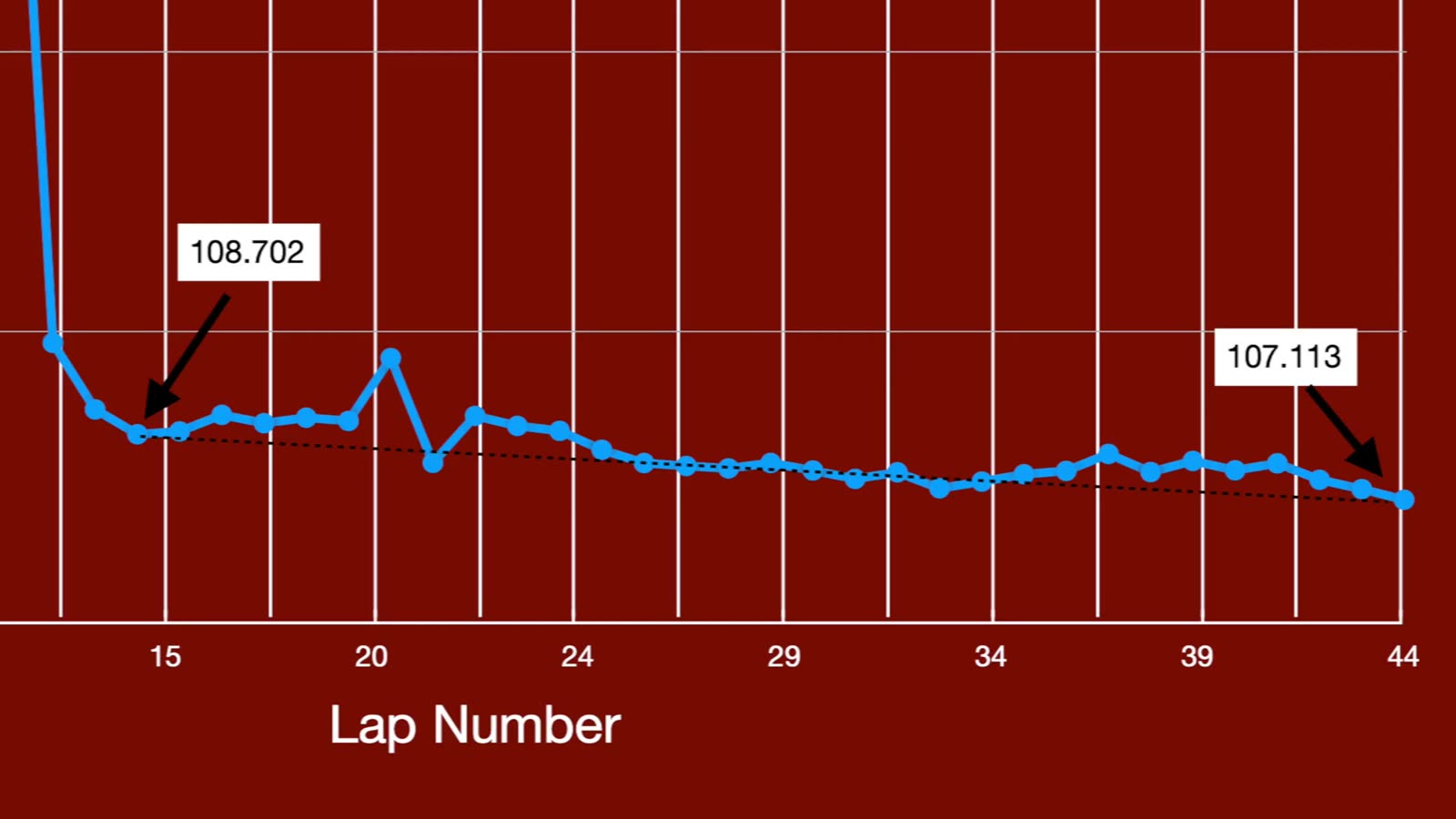
George pitted on lap 10 — and then did the kind of stint that gets tire engineers a little twitchy: 34 laps on the same set.
So you'd expect the classic F1 story: tire deg gets worse, lap times get slower, radio messages get dramatic, tires die.
But when you plot the lap times…
Something weird happens. The green line on the chart is George's only pit stop on lap 10 — Mercedes slapped the hard tires on, determined to finish the race with them.
And here's the punchline: his pace late in the stint is quicker than early on. His last lap was 1.6 seconds faster than when the tires were brand new. In other words — the tires are degrading, but the lap-time trend doesn't explode like you'd expect.
And the reason is physics
The heavy fuel the car is carrying is burning the whole time. As the tires degrade, they lose mass too — about 1 kg per tire.
On lap 10, the car is still carrying a lot of fuel — around 87 kg. By the end, it's basically running on fumes, and the four tires together are around 4 kg lighter. A lighter car is easier on everything — brakes, rotation, acceleration — so even while the tires are slowly giving up, the car is also getting lighter and faster.
The one-stop strategy works. George takes the checkered flag and wins the race.
04And Then F1 Delivers The Plot Twist
After the race, the FIA drains the last drops of fuel and re-weighs the car — and it comes in at 1.5 kg under the minimum weight allowed.
George was disqualified.
And this is exactly why I love data-driven breakdowns: you can see how tradeoffs stack up — pit time, tire life, fuel burn — and then the tiny margins that decide whether you're on the podium or watching from below.
05Overtakers Out — For Now
Thanks for watching. Drop a comment with questions, or what you want me to analyze next. And please help me out by liking and subscribing — it tells the algorithm I'm not just a guy making graphs in the dark.
And to conclude…
The dancing Cadillac cat.
Till next time.